The route becomes a gathering
A fixed route removes decisions. The course, the day and the start time are already settled, so the only choice left is whether to turn up. Parkrun, Couch to 5K and organised walks all use that idea. They suit people who want company, a light structure and no pressure to be quick.
Parkrun: the same course, every week
Parkrun began in 2004 in Bushy Park, London, and grew into a worldwide network of free, volunteer-run events. The standard event is 5 km, held weekly, usually on Saturday mornings in parks and open spaces. Participants register once, receive a personal barcode and have their time recorded at the finish.
The organisers stress that it is not a race, and people run, jog or walk the course. A volunteer known as the tail walker stays at the back so that nobody finishes alone. Junior parkrun offers a 2 km course for children aged 4 to 14. Details vary by location, so use parkrun's own event information before travelling.
A first visit, step by step
- Register on parkrun's own website and save or print your personal barcode.
- Find an event and check its start time and meeting point.
- Arrive early and look for the newcomers' welcome, which many events hold.
- Start near the back if you plan to walk or jog. That is normal.
- Carry the barcode through the finish so it can be scanned.
- Stay afterwards if the group gathers, as many do.
Couch to 5K: a structured way back
Couch to 5K is an NHS programme that alternates short stretches of running with walking, building up over nine weeks with three sessions a week. It was designed for people who have never run, or have not run for years.
The programme itself is solo, which is where a group can help. A natural next step is a parkrun, which uses the same 5 km distance as the final goal. Check the NHS website for the current version of the programme and its guidance.
Walking groups: the slow version of the same idea
The Ramblers, a walking charity in Great Britain, supports volunteer-led group walks that are graded by distance and difficulty. A leader plans the route and sets the pace, so you do not need to navigate or know the area.
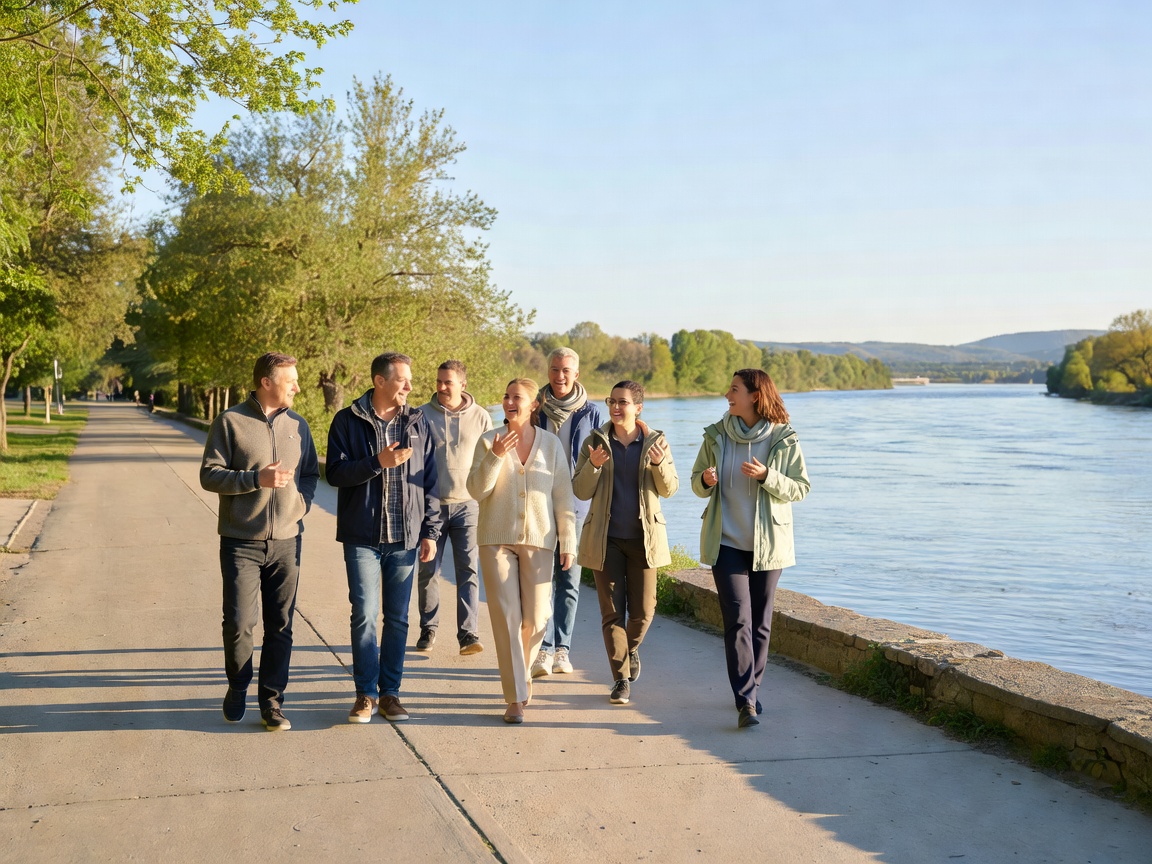
Shorter, slower walks suit beginners and returners, and there is usually time to talk. Walking groups also exist outside the Ramblers, run by community centres, councils and interest groups. The principle matches parkrun: the route is the meeting point and the walk is the excuse.
Why routes help people return
A repeated route makes change visible without comparison. The hill that felt long in week one feels shorter in week six, and nobody else needs to notice. Routes also offer practical safety: daylight, company and a plan someone else has checked. Bring water, wear shoes you can walk in and dress for the weather. If you feel unwell, stop. Every group expects it.
| Format | Distance and pace | Who leads | Cost |
|---|---|---|---|
| Parkrun | 5 km; run, jog or walk | Volunteers | Free to take part |
| Junior parkrun | 2 km; ages 4 to 14 | Volunteers | Free to take part |
| Couch to 5K | Nine-week run and walk plan | Self-guided | NHS programme; check its site |
| Organised walks | Graded by distance and difficulty | Volunteer leader | Check each group |