A rally creates the meeting point
Padel, pickleball, walking football and Ultimate share one useful trait: nobody can play them alone. A rally, a pass or a throw needs another person, so conversation and routine arrive with the game. Each format has a different pace, a different learning curve and a different way of turning strangers into regulars.
Why doubles make it easy to start
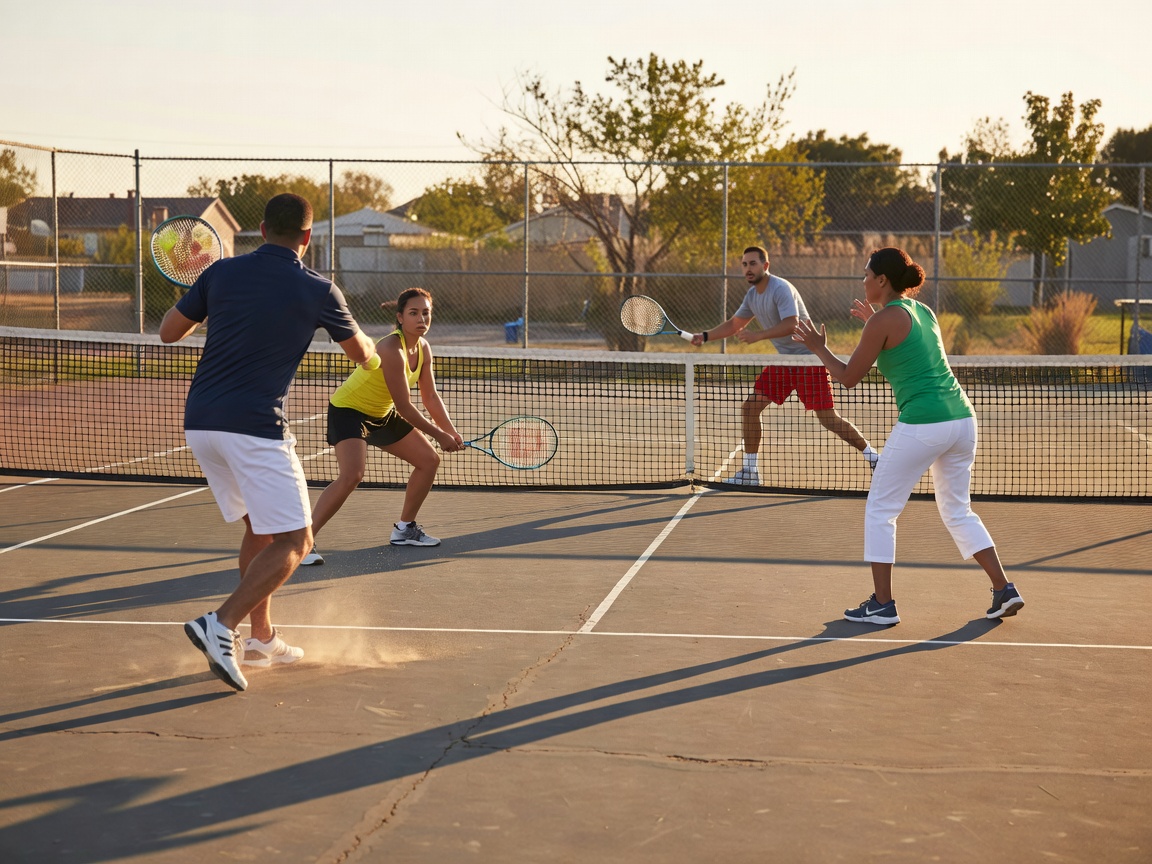
Doubles formats lower the stakes. With four people on a court, a missed shot belongs to a pair rather than to you, and the ball spends much of its time in play between other people. Padel is played almost entirely as doubles. Pickleball is played as singles or doubles, with doubles the usual social choice.
Both use courts smaller than a tennis court, so there is less ground to cover and more time to talk between points. Many venues and clubs run open or social sessions where players rotate partners. Within an hour you have played alongside several people and learned a few names. Ask whether a session is for beginners, mixed levels or experienced players before you turn up.
Padel: walls, doubles and short rallies
Padel was created in Acapulco, Mexico, in 1969 by Enrique Corcuera, and it took hold first in Spain and Argentina before spreading further. The court measures 20 by 10 metres and is enclosed by glass and mesh walls. The ball may rebound off those walls after it has bounced on the floor, which keeps rallies alive far longer than on an open court.
The serve is underarm, and the racket is solid, with no strings and a perforated face. Because the walls return so many shots, beginners can often hold a rally within the first session. The International Padel Federation oversees the sport internationally.
Pickleball: a small court and a gentle start
Pickleball was invented in 1965 on Bainbridge Island, Washington, by Joel Pritchard, Bill Bell and Barney McCallum. It borrows from tennis, badminton and table tennis. The court is the size of a badminton doubles court, the ball is a perforated plastic ball, and the paddle is solid.
Two rules shape the game. After the serve, the ball must bounce once on each side before anyone volleys. And players may not volley from inside the non-volley zone beside the net, nicknamed the kitchen. Together they slow the pace and reward placement over power, so people of different ages and fitness levels can play the same game.
Walking football and Ultimate: team games at a chosen pace
Walking football began in England in 2011, with Chesterfield often credited as its starting point, as a way to keep older players in the game. Running is not allowed, contact is avoided and teams are small, so sessions usually take place in sports halls or on small pitches. Many sessions are aimed at players over 50, though age bands differ between organisers.
Ultimate comes from Columbia High School in Maplewood, New Jersey, in 1968. Seven players per side pass a flying disc towards an end zone, and the thrower cannot run with it. Play is non-contact, and players call their own fouls under a principle called the spirit of the game. The World Flying Disc Federation oversees the sport internationally.
The four formats side by side
| Format | Where it began | Typical shape | Contact | Worth asking |
|---|---|---|---|---|
| Padel | Acapulco, Mexico | Doubles on an enclosed 20 × 10 m court | None; the walls are part of play | Whether rackets can be borrowed |
| Pickleball | Bainbridge Island, Washington | Singles or doubles on a small court | None | Whether paddles can be borrowed |
| Walking football | England | Small-sided teams, no running | Avoided by rule | Who the session is for, and the surface |
| Ultimate | Maplewood, New Jersey | Seven a side with a flying disc | Non-contact | Whether a beginners' session exists |
Your first session, step by step
- Pick one format and look for a session described as beginner, social or all-levels.
- Ask the organiser what to bring and whether equipment can be borrowed.
- Arrive ten minutes early and tell someone it is your first time.
- Play to learn the rhythm, not to win points.
- Stay until the end, because the conversation afterwards is where regulars are made.
- Decide after three visits, not one.